Skip to content

An Ice Age crystal story from the Canadian prairies
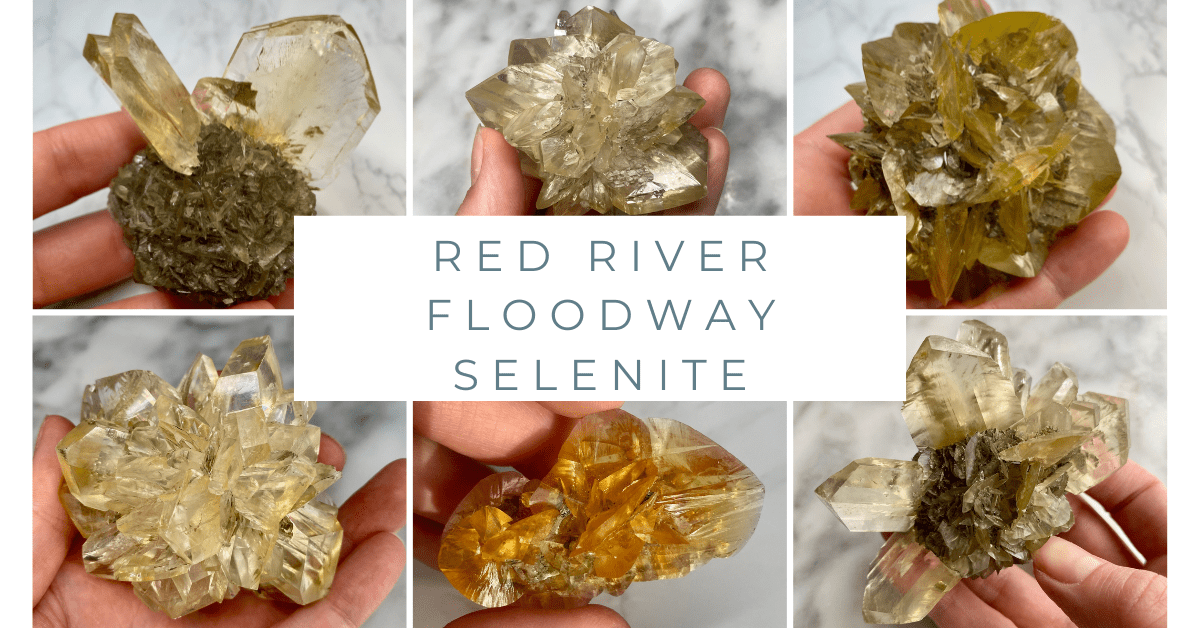
Every mineral specimen carries a story, and some are bound as much to place as to chemistry. The selenite crystals from the Red River Floodway in Manitoba, Canada are just that: local treasures with an unmistakable personality. They formed quietly underground, preserved in fine glacial clays, until human engineering cut into their hiding place and revealed them to the world. Today, they stand as one of Canada’s most celebrated mineral localities, and for good reason.
Let’s take a deep look into what makes these crystals so appealing: the fascinating geology of their home, their identity as selenite, how they grow into such unusual shapes, and the mineral properties that make them sparkle both in daylight and under UV lamps.
Locality Spotlight: The Red River Floodway
To appreciate Red River selenite, you need to picture its setting.
The Red River Valley is a vast, flat plain stretching through Manitoba and into North Dakota and Minnesota. Long ago (between 11,000 and 9,000 years ago) this was the bottom of glacial Lake Agassiz, one of the largest freshwater lakes ever to exist on Earth. As glaciers melted, they released torrents of fine clay, silt, and sand into the basin. Layer upon layer of these soft sediments accumulated, entombing whatever crystals formed within them. These clays were the crystal nursery of the gypsum selenites.
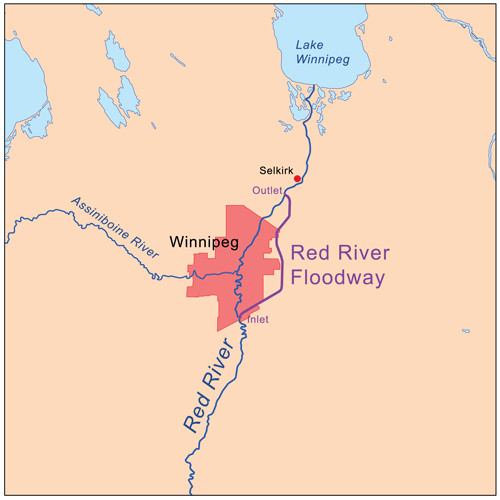
Fast forward to the 1960s: Winnipeg, the region’s largest city, needed protection from the Red River’s notorious spring floods. Engineers dug a 30-mile-long flood-control channel (about 48km) known as the Red River Floodway, nicknamed “Duff’s Ditch.” In carving this massive trench, they sliced straight through the Pleistocene lake clays, and in doing so, they opened up pockets and seams where selenite crystals had been quietly growing for thousands of years. The creation of the Floodway simply exposed nature’s hidden treasures.
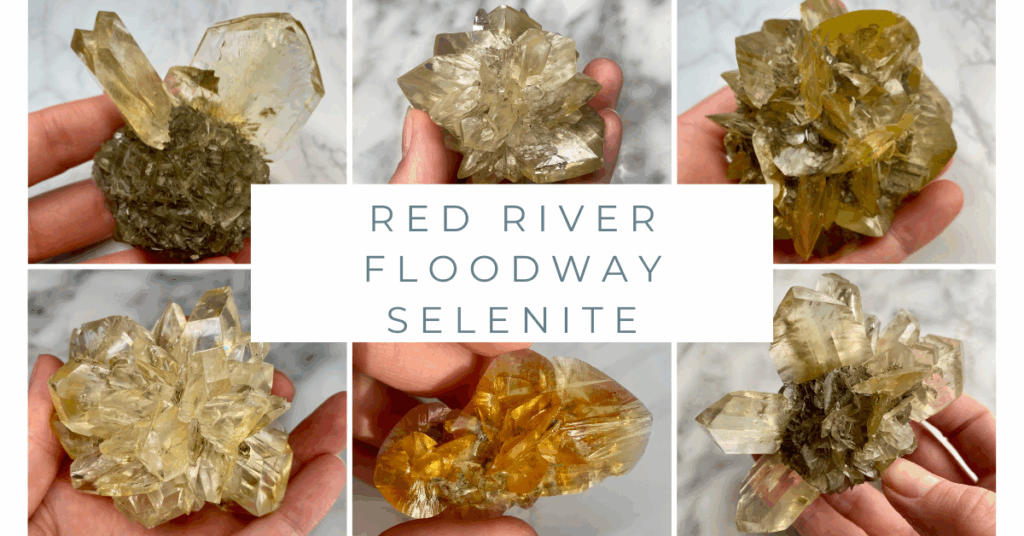
What’s unique about this locality is not just the presence of selenite, but its abundance and quality, particularly the ones extracted from the 60s to the 80s. In some sections of the floodway, gypsum seams run wide across a corridor up to 20 kilometers. Crystals occur in clay-rich horizons, often in clusters or nodules that collectors affectionately call “gypsum balls.” When broken open, these nodules reveal sprays of transparent blades or the elegant swallowtail twins that make Red River specimens so distinctive.
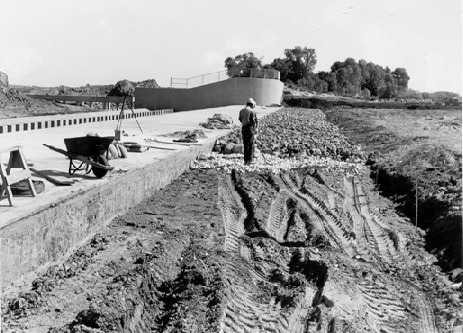
It’s worth noting that collecting here is now highly restricted. Because the floodway is critical infrastructure, collecting happens only through licensed, controlled activities, and most disturbed or excavated areas are backfilled. That means specimens in circulation today represent specific collecting campaigns and aren’t an endlessly renewable resource. In other words, each crystal carries not only geologic history but also rarity tied to difficult access. Because it is not a casual collecting locality, fine specimens are highly prized.
What is Selenite (and why is the Red River Floodway variety so prized)

Selenite is the crystalline variety of the mineral gypsum (CaSO₄·2H₂O). Gypsum is everywhere: it’s the soft white powder in drywall, the additive in cement, even part of the plaster that coats old walls. But in nature, gypsum sometimes expresses itself in a more elegant form: large, transparent crystals that are glass-clear or delicately colored, from light yellow to deep honey brown.
Unlike the fibrous “satin spar,” Red River material forms in thin to thick tabular blades that can twin into the familiar swallowtail/“duckbill” shapes that gypsum is famous for.
Collectors prize selenite from the Red River Floodway because of its unusual combination of traits:
- Transparency and clarity. Fine specimens can look like frozen water, their blades see-through and sharp-edged.
- Full Floaters. Many Red River pieces are complete “floaters”, meaning they are crystallized all around with no matrix. You’re looking at pure crystal architecture, unencumbered.
- Perfect cleavage. Selenite splits into thin sheets so evenly that ancient peoples used it as windowpanes. The name “selenite,” from the Greek selēnē, meaning “moon,” refers to its moon-like glow. (Personally, these specimens remind me more of the luminosity of the sun due to its pale yellow to deep caramel coloration).
- Twinning. Gypsum loves to form symmetrical intergrowths, most famously the “swallowtail” or “duckbill” twins. These V-shaped crystals are textbook examples of mineral twinning and are instantly recognizable to collectors.
What makes the Red River material particularly interesting is how all these traits (clarity, twinning, and delicate luster) come together in one locality, in forms that look both geometric and organic at the same time.
A few additional tricky traits are to be considered:
- Softness and delicacy. With a Mohs hardness of 2, you can scratch it with a fingernail. That fragility makes intact, large crystals all the more impressive.
- Lustre. When found, specimens have to be delicately cleaned to remove them from their clay encasings. This process is arduous due to the fact that it has to be done very gently, one layer at a time, aiming for minimal crystal exposure to water. If the crystals are too exposed to water, it will quickly lose its lustre, and this natural shine cannot be retrieved. Specimens with high lustre are particularly prized.
How Red River Floodway Selenite Crystals Grow
One of the delights of Red River selenite is how its growth stages are written into the specimens themselves. Many show two distinct phases of crystallization:
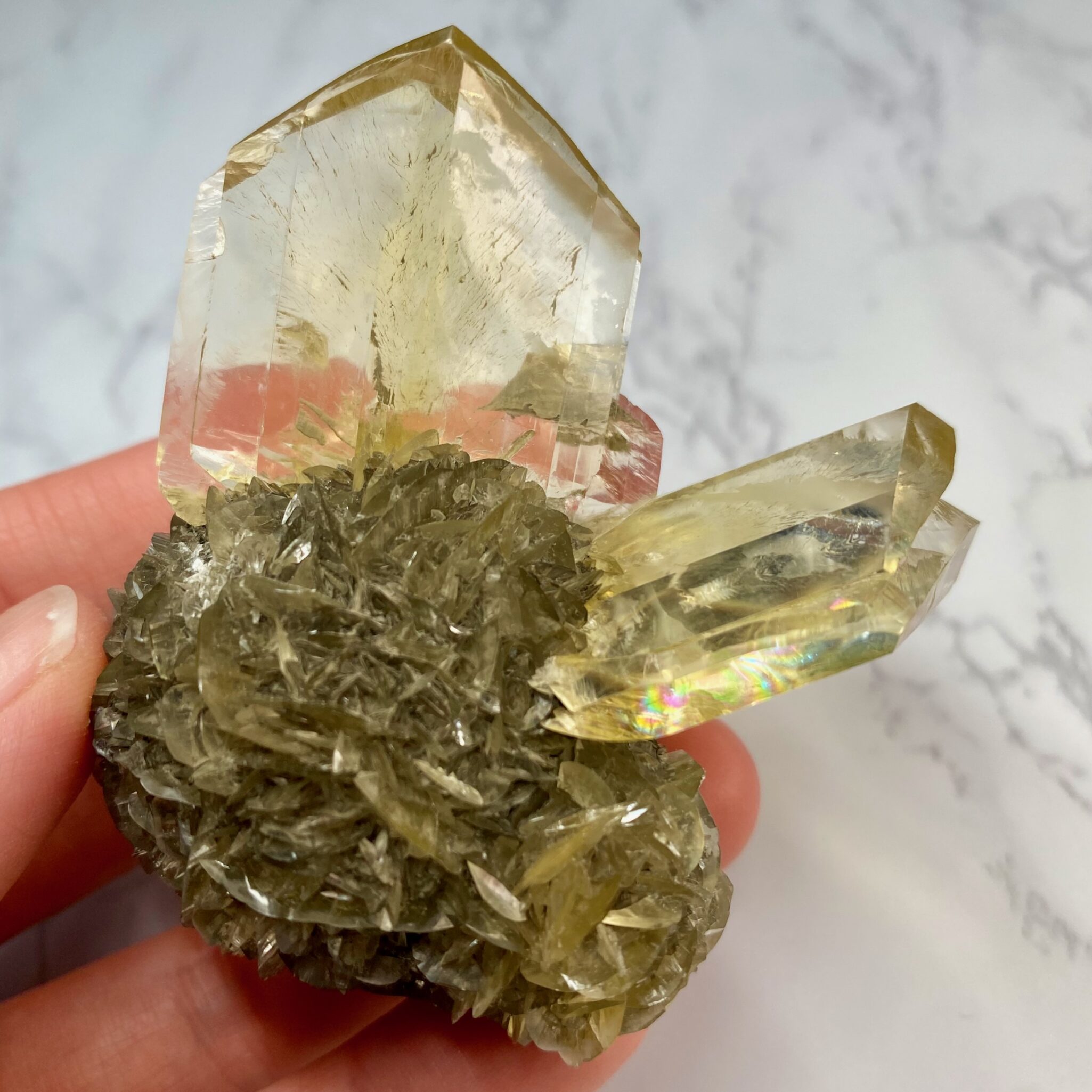
- First stage: the rosette. Thin, radiating blades form spherical to hemispherical clusters. These resemble flowers, often with a slightly frosted surface. Collectors sometimes call them “balls” because of their rounded form.
- Second stage: the duckbill. Later, thicker tabular blades sprout outward from the rosette. These are the striking twins (swallowtail or duckbill shapes) that look like petals opening from a bloom. They give the crystal its architectural, almost sculptural appearance.
Because the crystals grow in soft clay rather than on hard rock, many are floaters, fully developed on all sides without attachment to a matrix. That freedom of growth means they often display sharp edges, complete terminations, and minimal damage from surrounding material. Imagine a crystal slowly pushing aside pliable mud as it grows; the result is a specimen that looks intentionally crafted, rather than broken from a larger vein.
This growth habit also explains the remarkable purity of form: smooth faces, symmetry, and in some cases, dramatic interlocking groups that seem to defy gravity.
Different depths of formation: different aesthetics
One of the fascinating things about the Red River Floodway selenite is how depth influences appearance. As excavation peeled through layers of old Lake Agassiz clay, collectors noticed that crystals showed different habits depending on how deep they were buried:
- Shallow layers (near surface): Here, conditions were more exposed to oxidation and organic staining. Crystals from this zone often carry a rich caramel to honey coloration, caused by iron oxides and other trace impurities that seeped into the clay. They’re earthy, warm-toned, and distinct from the paler forms found deeper down.

- Intermediate depths (up to ~20 feet): In this clay horizon, specimens often appear as tighter rosettes with more clay inclusions locked between blades. The surrounding sediment influenced crystal growth, producing compact “balls” that sometimes evolve into dramatic duckbill twins sprouting from the surface. These are the pieces where the sculptural, architectural qualities of Red River selenite really come alive.
- Deeper layers (up to ~40 feet): At greater depths, with less organic material and fewer inclusions, the crystals had the space and purity to grow larger and clearer. This is where we find the spectacular starburst clusters; thick, glassy blades radiating in multiple directions, usually pale yellow to nearly colorless. With less interference from clay, they often show exceptional clarity and luster.

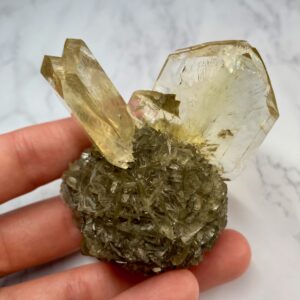
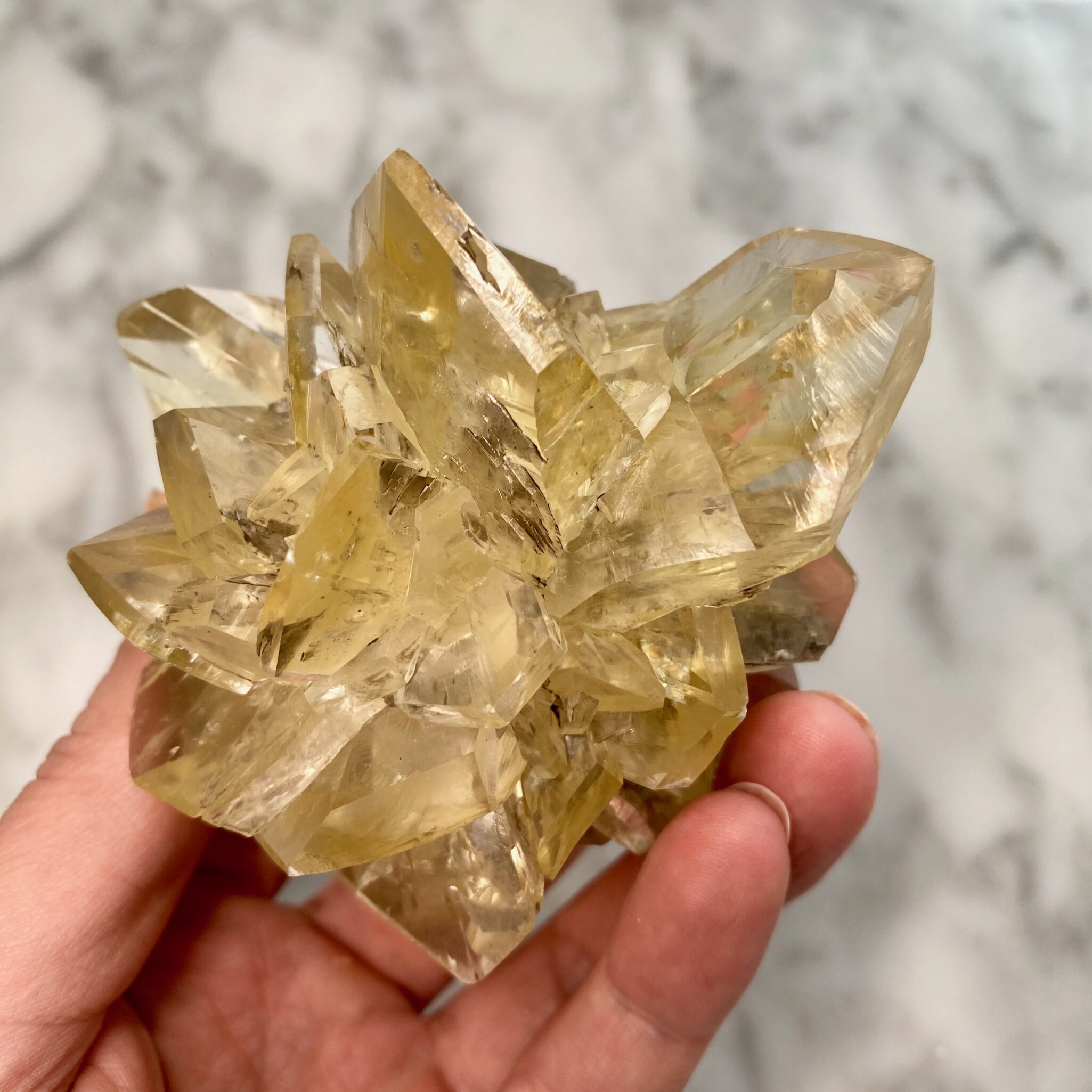
Geologically, these differences reflect micro-environments within the Lake Agassiz sediments. Variations in groundwater chemistry, organic content, and compaction pressure at different depths created subtly different growth conditions. The result is a natural gradient: earthy caramel plates above, sculptural rosettes and twins in the middle, and radiant starbursts deep below. Together, they tell the story of how one mineral can adopt multiple personalities within a single locality.
The look: color, luster, and light
On first glance, Red River selenite appears colorless to pale straw-yellow, sometimes with smoky or tea-colored tones from subtle inclusions. The crystals are glassy, with a pearly sheen on cleaved surfaces and a bright, almost icy sparkle under good lighting.
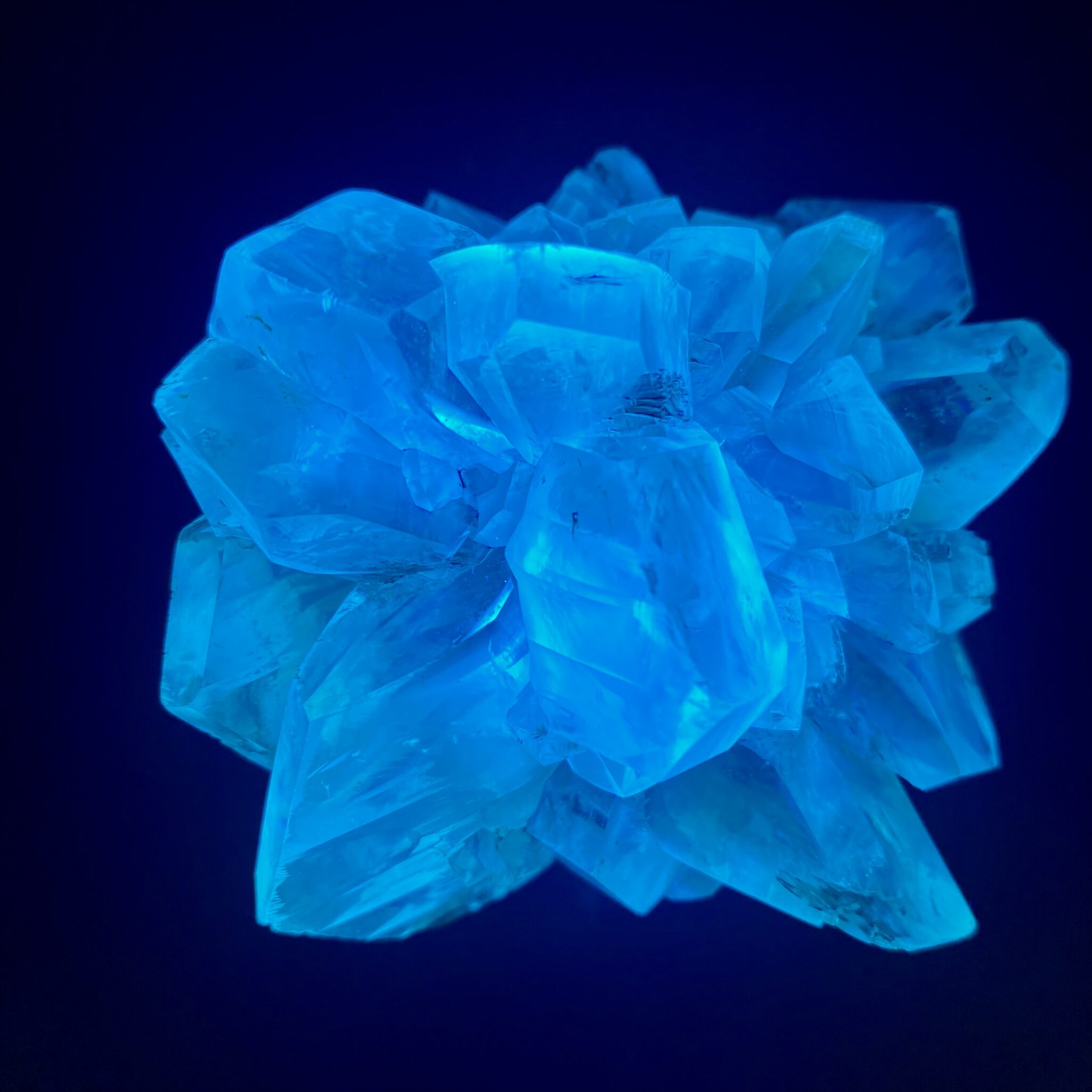
But the real magic begins when you introduce ultraviolet (UV) light. Many specimens from this locality are not only fluorescent but also phosphorescent; a two-part light show that deserves unpacking.
- Fluorescence is when a mineral glows under UV light because electrons inside its atoms absorb the high-energy radiation and then release visible light almost instantly. In Red River selenite, the fluorescence is often a bright blue-white or greenish glow.
- Phosphorescence is fluorescence with a delay: the glow continues even after you switch off the UV lamp, fading gradually over a few seconds. This happens because some of the excited electrons take longer to relax back to their normal state, releasing light slowly.
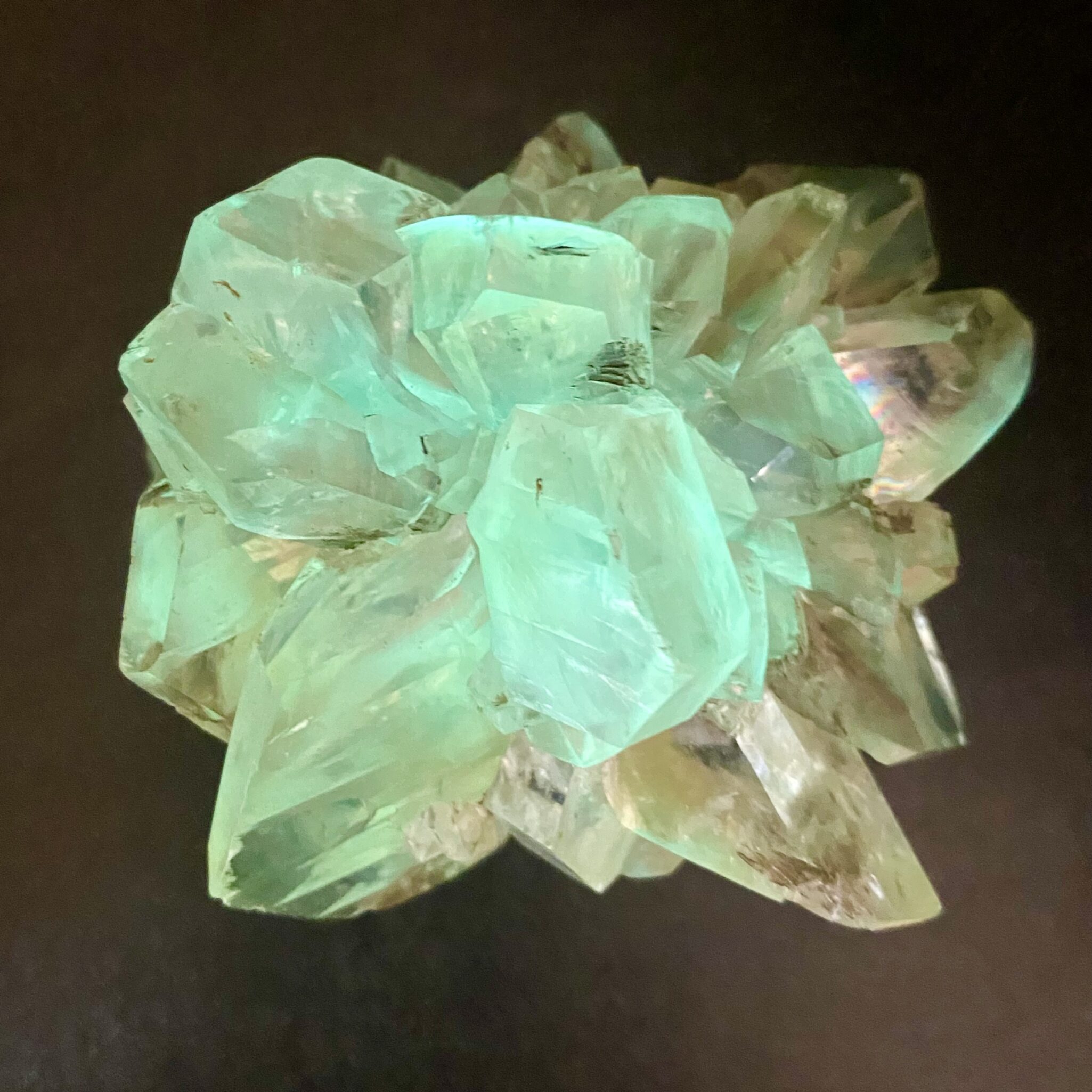
The cause of these effects in gypsum is thought to be trace impurities: tiny amounts of organic material or other activators trapped in the crystal structure. While not every specimen fluoresces strongly, many from Red River do, and some show particularly vivid afterglows that captivate collectors of fluorescent minerals.
The result is that a single specimen has two personalities: by day, a clean, geometric cluster of blades; by night, a glowing, otherworldly form. It’s this duality, static beauty in daylight, kinetic magic in UV, that makes Red River selenite stand out.
Why Red River Floodway selenite is remarkable
Let’s bring it together. What makes this locality so celebrated?
- Unique crystal habits. The combination of rounded rosettes and bold duckbill twins creates a sculptural aesthetic not common elsewhere. It’s gypsum at its most expressive, and classing gypsum twinning, but arranged in a uniquely floral, three dimensional way.
- Floater specimens. Complete crystals with no matrix, perfectly terminated all around, are collector favorites and they abound here. They make remarkable cabinet specimens.
- Fluorescence and phosphorescence. The glow effect is strong enough to impress even seasoned collectors of UV minerals.
- Canadian classic. Mineral literature consistently lists the Red River Floodway among Canada’s important gypsum localities. Owning one is like holding a small piece of national mineral heritage.
- Limited availability. With controlled collecting and much of the floodway inaccessible, supply is finite. Fine specimens don’t pour onto the market, which makes them both collectible and conversation-worthy.
Caring for your selenite
Because gypsum is soft and water-sensitive, it needs a little extra care: 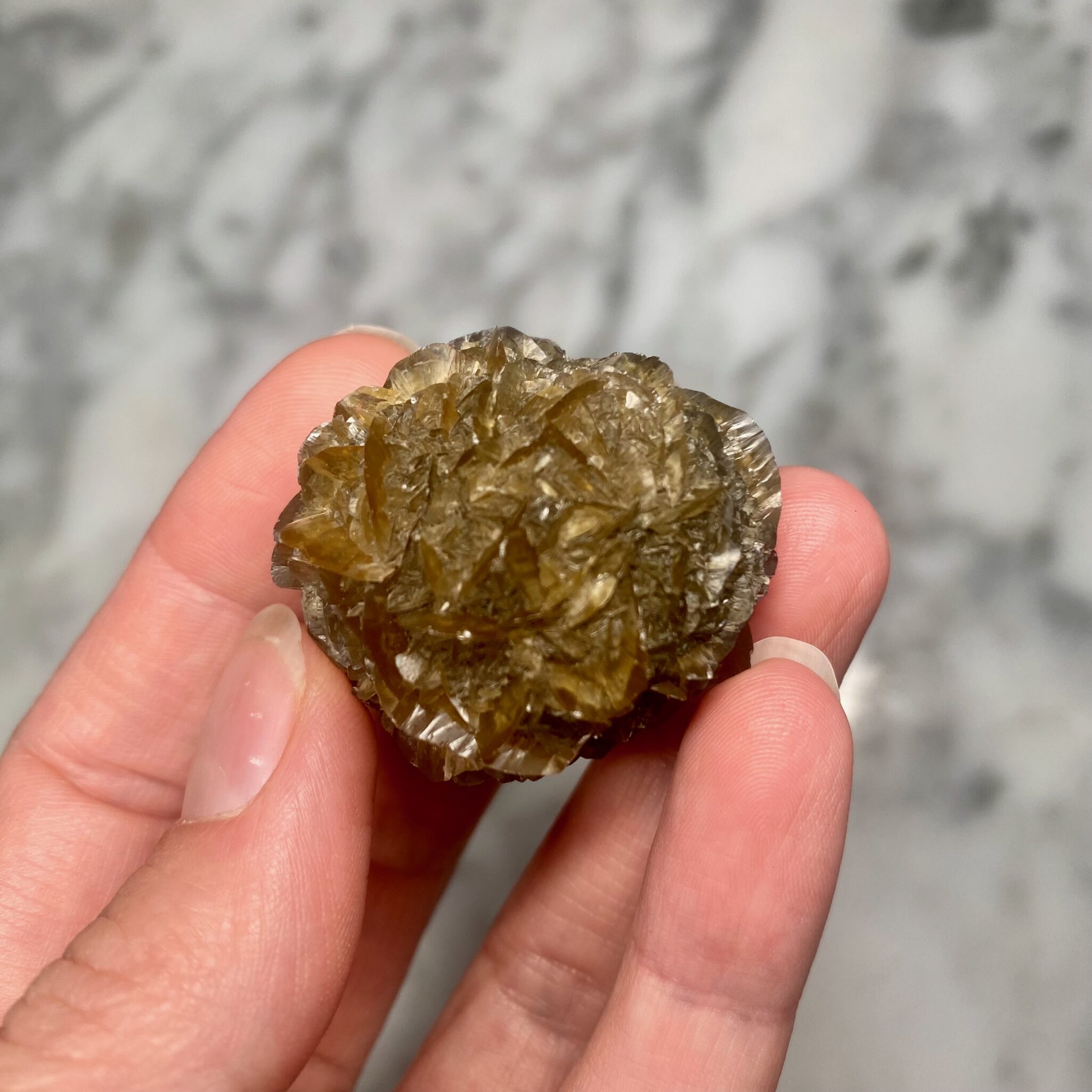
- Keep it dry. Avoid rinsing in water; even brief exposure can leave etching or dullness. You could greatly affect the lustre of your specimen by exposing it to water, and once dulled, there is no going back.
- Dust gently. Use a blower bulb or very soft brush.
- Protect from scratches. Display away from harder minerals.
- Avoid heat and humidity swings. Gypsum can dehydrate if overheated, altering its structure.
With a little mindfulness, these crystals will retain their clarity and glow for decades.
Closing thoughts
The Red River Floodway selenite story is one of those perfect convergences: ancient Ice Age sediments, the quiet patience of crystal growth, and a modern engineering project that revealed their hidden beauty. The specimens that emerged are remarkable not just for their looks but for the narrative they carry, of glacial lakes, prairie geology, and a Canadian locality that left its mark on the mineral world.
Whether you’re a collector of fluorescent minerals, a lover of Canadian classics, or simply someone drawn to natural forms that echo flowers and architecture alike, these crystals have something to offer. They shine in a cabinet by day, glow enchantingly under UV light by night, and always spark conversation about the unlikely places where natural beauty hides.
At Minera Emporium, we’re proud to offer Red River selenite specimens that capture the very best of this locality: clean floaters, bold duckbill twins, and glowing personalities. Browse our current selection and let one of these Ice Age gems add a little magic to your collection.
Bibliography and Further Reading
- Mindat.org – Red River Floodway locality page
A great starting point with photos, specimen notes, and technical locality info.
https://www.mindat.org/loc-6856.html - Geological Association of Canada (1983), “Quaternary Stratigraphy and History in the Southern Part of the Lake Agassiz Basin.”
A deeper dive into the Ice Age lake deposits (Lake Agassiz) that hosted these crystals. - Manitoba Floodway Authority (2003), Environmental Impact Statement.
Details on how the floodway was constructed and how it cuts through the Lake Agassiz clays. - Mariano & Ring (1975), Luminescence of minerals from Manitoba, Canadian Mineralogist.
Classic study describing why Manitoba selenite glows under UV and even phosphoresces afterward. - D. Bone (2010), “Selenite Crystals of the Red River Floodway,” Rock & Gem Magazine.
A collector-oriented overview with good photos and field anecdotes. - C. Walker (2003), Minerals of the World.
General mineral reference with an excellent section on gypsum and its twinning habits. - K. Nassau (1983), The Physics and Chemistry of Color.
Not specific to Manitoba, but a go-to resource for understanding fluorescence and phosphorescence in minerals. - Manitoba Geological Survey (2015), Quaternary Geology of Southern Manitoba.
Covers the glacial clays and sedimentary history that host Red River selenite.