A jewel of the North in a league of its own
Lazulite from Rapid Creek, Yukon holds a unique place in mineral collecting. Strikingly blue and sharply crystalline, these specimens combine geological rarity with a story of remoteness and perseverance. Collectors often liken them to sapphires; yet unlike these gems, Rapid Creek lazulite is naturally rare and finitely sourced.
At Minera Emporium, we think of these pieces are one of the most beautiful Canadian fine minerals currently available. Let’s take a journey into what this mineral really is, why that remote creek in the Yukon is special, how these crystals grow, what gives them their mesmerizing color and form, and care tips to preserve their brilliance.
Table of Contents
Lazulite from the Dawson Mining District is widely regarded as the finest in the world. Discovered in the 1970s, these crystals quickly gained attention for their intense indigo color, sharp crystal habits, and mirror-like luster. Their reputation has endured for decades because of the locality’s unique geology.
Rapid Creek belongs to the Rapid Creek Formation, a thick Cretaceous sequence of phosphate- and siderite-rich ironstone interbedded with shale and sandstone. During later tectonic activity, folding and fracturing allowed phosphate-rich hydrothermal fluids to permeate the rocks. As these fluids cooled, a remarkable suite of phosphate minerals crystallized, including lazulite, fluorapatite, wardite, augelite, whiteite, and over two dozen others.
Fluid-inclusion studies suggest that lazulite formed at relatively low temperatures (about 180–200 °C), a factor that helped preserve the sharpness and clarity of the crystals. The Geological Survey of Canada has documented more than thirty phosphate minerals from the area; among them, lazulite stands out not only as the most collectible, but also as the official gemstone of Yukon.
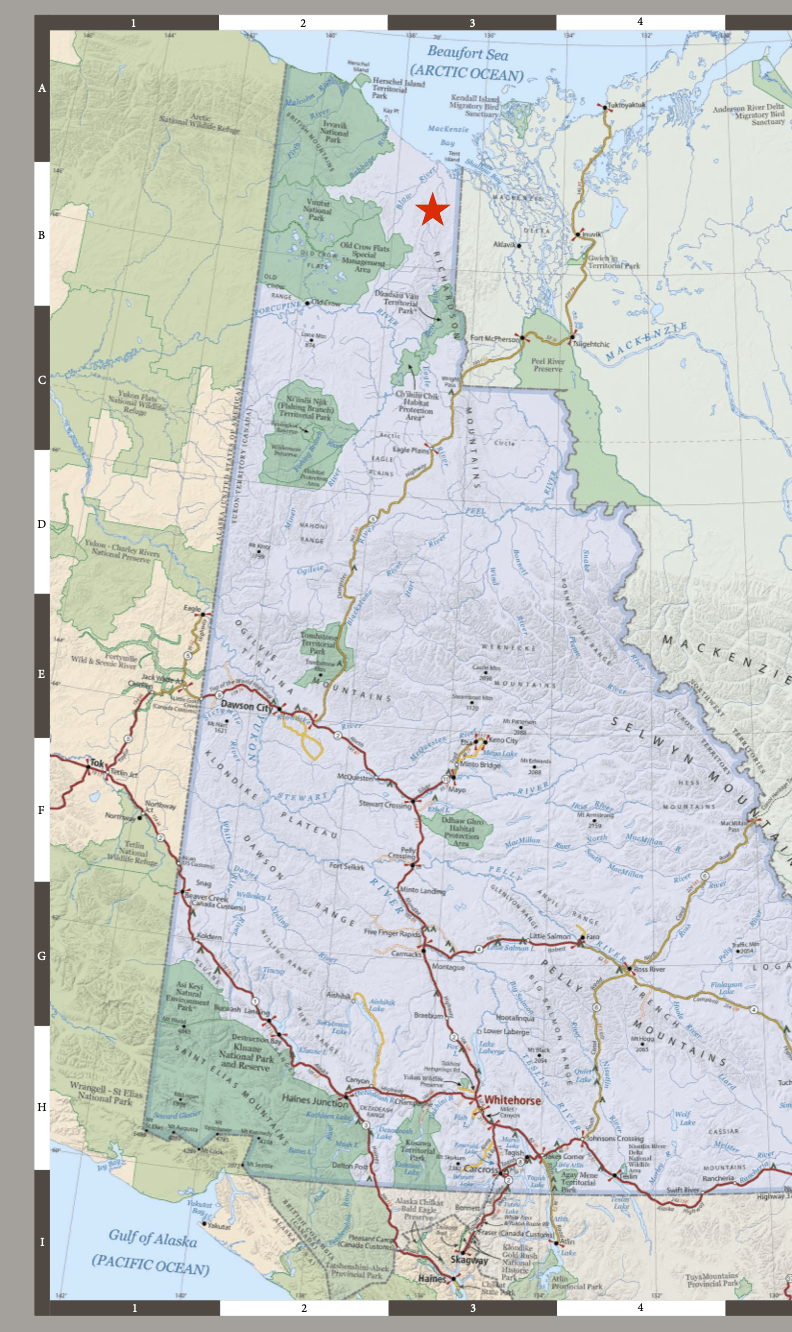
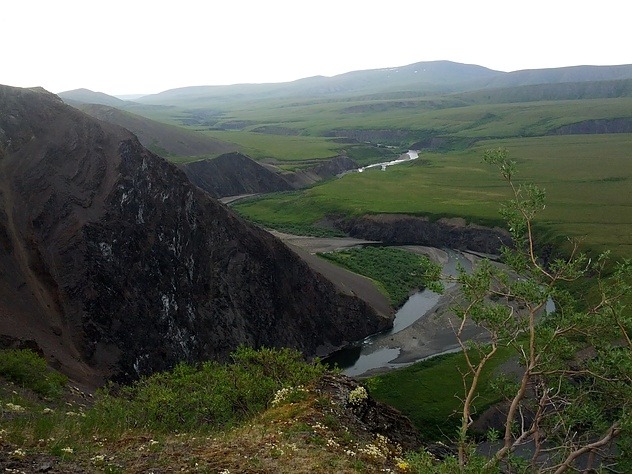
The Rapid Creek and Big Fish River area is one of the most remote mineral localities in Canada. Lying in the Arctic tundra, it is inaccessible by road and blanketed in snow for much of the year. In the past, collectors relied on helicopter-supported expeditions, carefully planned during the short Arctic summer. These journeys were expensive, logistically difficult, and often undertaken only by seasoned rockhounds with intimate knowledge of the terrain.
Most specimens available today trace back to the work of just a handful of dedicated miners active in the late twentieth century. Today, the area is under Indigenous stewardship, and new collecting is no longer permitted. As a result, no new lazulite enters the market, and existing specimens have become increasingly scarce and prized.
This combination of remoteness, cultural protection, and geological uniqueness is why Rapid Creek lazulite is considered not only aesthetically in a league of its own, but also a prized locality to add to any collection.
Chemically, lazulite is a magnesium aluminum phosphate hydroxide, with the formula MgAl₂(PO₄)₂(OH)₂. It occupies one end of a solid-solution series with scorzalite (the iron-rich equivalent). Crystallizing in the monoclinic system, lazulite often forms steep bipyramidal or wedge-shaped crystals that are tabular, prismatic, and frequently twinned.
When all of these qualities converge in a single specimen, the result is unforgettable.
Lazulite from Rapid Creek formed in phosphate-rich veins that cut through ironstone layers. As tectonic stress fractured the rock, hydrothermal fluids carried dissolved phosphate minerals into open spaces. As these fluids cooled, lazulite nucleated and grew, often alongside quartz and siderite.
Because these veins are limited and non-renewable, each specimen represents a geological event that will not repeat.
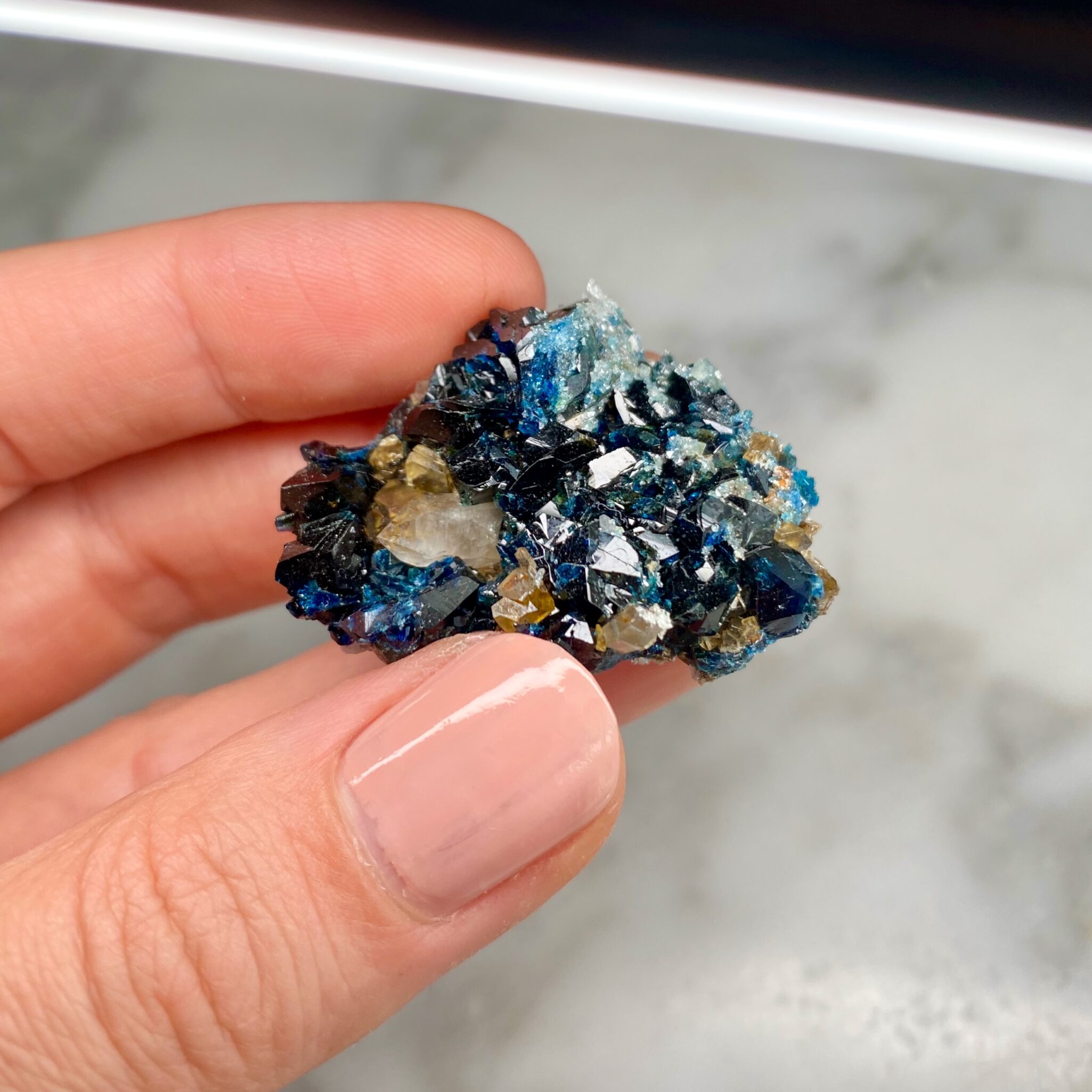
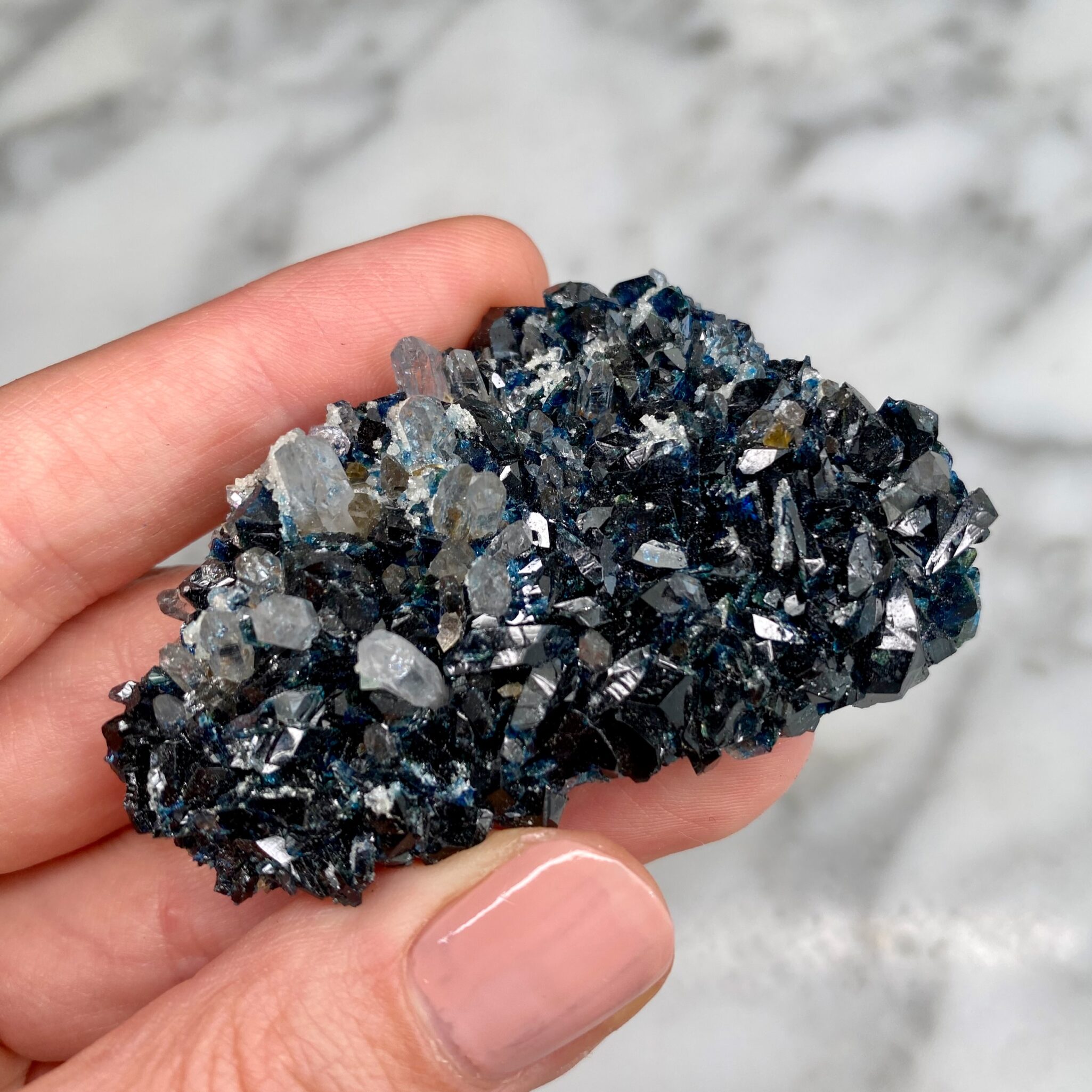
Rapid Creek lazulite stands apart for three reasons: color saturation, crystal form and lustre, as well as provenance. Collectors often describe it as “sapphire-like,” yet richer. Crystals may form isolated twins up to 1.5 cm, or dense nests against a matrix of quartz and siderite.
Lazulite is not unique to Canada; it occurs in small quantities across the globe. Classic European sources, particularly in Austria, Germany, and Sweden, have produced lazulite for centuries. These deposits are historically important and mineralogically diverse, but the crystals are usually modest in size, variable in color, and more valued for academic or historic reasons than for sheer visual impact. Collectors often prize them for rarity of provenance rather than beauty.
Brazil, especially Minas Gerais, is another notable source. There, lazulite tends to occur in masses suitable for lapidary use. Cut stones and cabochons can display rich blue hues, but they lack the sharp terminations, twinning, and saturated, inky color that distinguish cabinet-quality crystals from the Yukon. Brazil gives volume and color for jewelry; Rapid Creek gives perfection of form for display.
Other localities, including Madagascar, Bolivia, and scattered Alpine sites, add to the species’ global presence. These often produce scorzalite-rich material, smaller crystals, or darker shades that lean toward indigo-black rather than sapphire-blue. The United States has produced attractive material as well, most famously at Graves Mountain in Georgia, though those specimens typically appear as isolated crystals within quartzite rather than lustrous clusters.
What sets Rapid Creek apart is the convergence of qualities: unusually large, sharply terminated, vividly blue crystals formed in phosphate-rich ironstones of the high Arctic. Unlike other regions, where lazulite is either rare, massive, or aesthetically inconsistent, the Yukon specimens consistently deliver the best combination of color, luster, and geometry. For many collectors, they are not just among the best lazulite specimens; they are the benchmark against which all others are measured.
In short, Rapid Creek lazulite is a natural masterpiece—rare, beautiful, and historically significant.
Though sturdier than fragile minerals like selenite, lazulite still requires mindful care.
With proper care, these minerals will maintain their northern brilliance for generations.
If Manitoba selenite reflects the quiet beauty of Ice Age clays, then Yukon lazulite from Rapid Creek embodies Arctic boldness: intensely blue, crisply crystalline, and tied to one of Canada’s most remote landscapes. Each specimen tells a story of tectonics, hydrothermal fluids, short-lived collecting seasons, and the dedication of those who braved the tundra to recover them.
To own one is not simply to own a mineral; it is to hold a fragment of geological history, a rare confluence of beauty and story that cannot be replaced. At Minera Emporium, we are proud to share these natural treasures with collectors who recognize their extraordinary character. Find available specimens here, or contact us!
The Montreal Nature Show is back! The next edition, taking place from February 28th to…
The fall season is upon us, which means the 64th Annual Montreal Gem and Mineral…
After a highly successful first edition, Montreal Nature Expo is back! The next edition held…
An Ice Age crystal story from the Canadian prairies Every mineral specimen carries a story,…
Montreal’s highly anticipated springtime gem show is fast approaching! Mark your calendars for the 38th…
The Ottawa Rock N' Gem Show is set to dazzle attendees from April 10 to…
This website uses cookies.